


Why can a room look dry while materials are still wet?
Water can move beneath flooring, soak into carpet padding and enter wall cavities. The exposed surface may dry sooner than the layers underneath. Paint, flooring finishes and enclosed spaces can also make it difficult to see where moisture remains.
If you have just discovered a plumbing failure, start with our guide to what to do immediately after a burst pipe. Once the immediate problem is controlled, the next task is establishing how far water traveled and which materials are affected.
Staining, swelling or a musty smell can justify further investigation, but the absence of those signs does not prove everything is dry. Our article on signs of hidden water damage behind walls explains clues that are easy to overlook.
How do restoration professionals check for hidden moisture?
A professional assessment combines the history of the leak, visual inspection and measurements. Moisture meters help evaluate building materials. The EPA describes their use for locating wet areas and following drying progress in its guidance on moisture investigation and remediation.
Meter readings need context. Different materials, meter settings and measurement locations can produce different results. A number by itself does not explain whether drywall, framing or a subfloor is ready to be enclosed.
Thermal imaging may help identify temperature patterns that warrant closer inspection. A temperature pattern is a clue, so it should be checked with moisture measurements and other observations rather than treated as proof of water by itself.
Home Perfect’s water damage restoration services include moisture detection, water extraction, structural drying and dehumidification. The assessment helps determine which areas need drying and whether additional access or material removal is appropriate.
What is the difference between drying the air and drying the building?
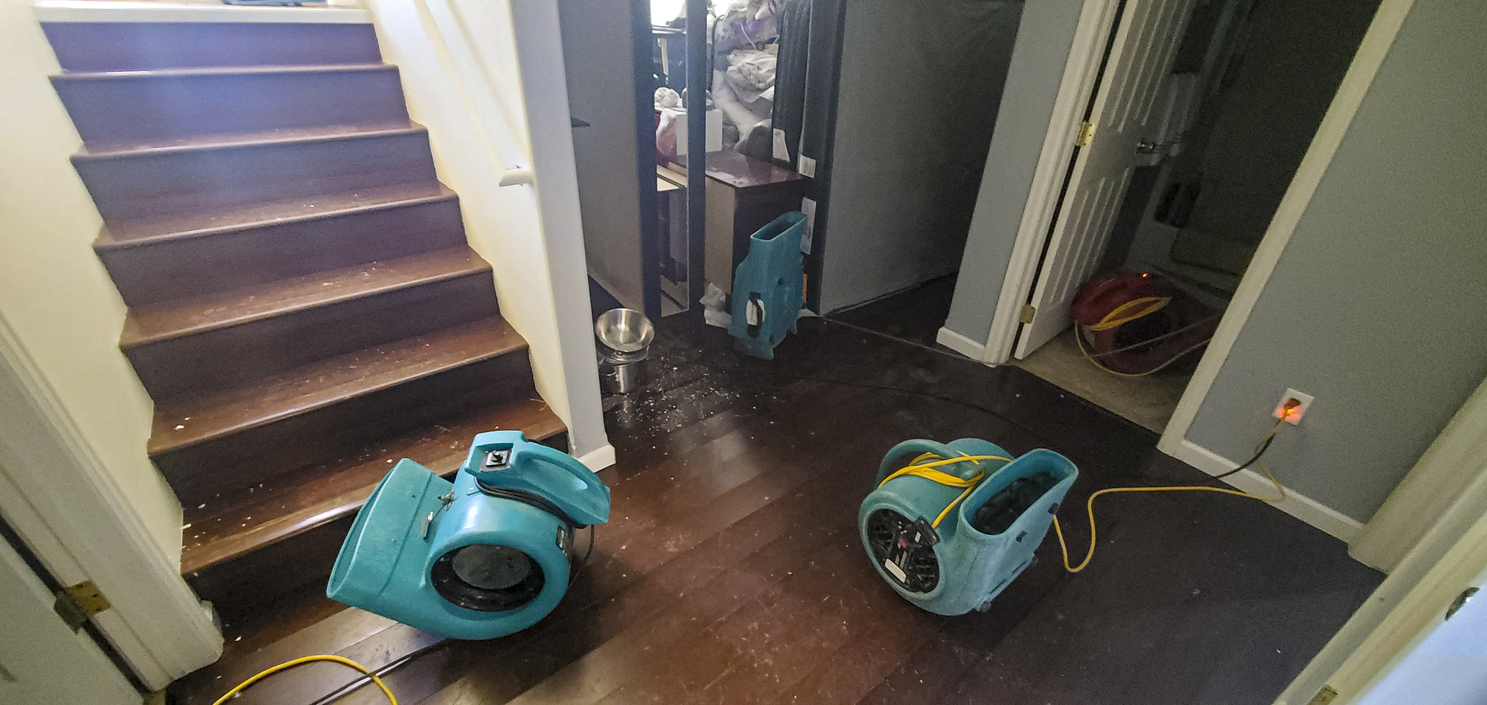
Air movers encourage evaporation from wet surfaces. Dehumidifiers remove moisture from the air. Both can support drying, but comfortable room air does not establish that every affected building material is dry.
For example, the room may feel comfortable while a section of subfloor beneath a cabinet remains wet. Monitoring needs to address the affected materials as well as the surrounding conditions. Equipment placement and the drying plan may need adjustment as readings change.
| What you observe | What it can tell you | What still needs checking |
|---|---|---|
| No standing water | Visible water has been removed | Moisture in flooring, walls and concealed spaces |
| A dry surface | The exposed layer may be drying | Underlying materials and wall cavities |
| Comfortable room air | Room conditions have changed | Moisture readings in affected building materials |
| Improving moisture readings | The measured area is making progress | Whether each affected area has met its drying goal |
What should a drying record explain?
Ask for an explanation of where measurements were taken, what materials were checked and how the drying goal was determined. A useful record makes it easier to understand the change between the initial assessment and the final checks.
- Which rooms, surfaces and concealed areas were affected.
- The initial moisture observations and the locations checked.
- Changes in readings as drying progressed.
- Materials removed or identified for replacement.
- The basis for deciding that retained materials are ready for repairs.
Repeated measurements are most useful when the locations and method are recorded consistently. Comparing affected materials with suitable unaffected materials can help establish context. There is no single moisture percentage that homeowners should apply to every wall, floor and finish.
If a repair involves new flooring or another moisture sensitive product, its manufacturer may specify additional testing or installation conditions. Those requirements should be checked before installation begins.
Does drying within 48 hours mean the job is complete?
The EPA recommends prompt drying to reduce the risk of mold. Its clean water damage cleanup guidance addresses action within 24 to 48 hours and emphasizes checking materials beneath flooring.
That guidance is a reason to act quickly, rather than a promise that every home will be dry within two days. The extent of the loss, affected materials, access and environmental conditions can change the drying process. Mold can occur before that window ends, and it does not automatically develop at a specific hour.
Use measurements and material condition to assess progress. The number of days equipment has run cannot replace those checks.
When might materials need removal instead of more drying?
Some materials may be too damaged or contaminated to retain. The decision depends on the water source, how long materials stayed wet, their condition and whether they can be cleaned and dried adequately. Drying cannot restore every material that has lost its integrity.
Visible mold or evidence of hidden contamination changes the work needed. Home Perfect provides mold remediation services when mold is part of the damage. Moisture control and mold cleanup address related issues, but completing one does not automatically establish that the other is finished.
Do not use fans before determining that the water is clean or sanitary. Keep away from standing water that may involve electricity, and leave contaminated water or suspected mold disturbance to appropriately experienced professionals. Avoid opening walls yourself to look for moisture when there may be electrical or contamination hazards.
What should happen before walls and floors are repaired?
Before reconstruction, the team should confirm that the moisture source has been addressed, explain the final moisture findings and identify remaining cleanup or replacement work. Ask whether any areas could not be checked and how those limitations will be resolved.
Photographs, measurement records and a clear repair scope help keep the transition understandable. Moisture verification is one part of readiness; structural condition, contamination and product installation requirements may also matter.
Home Perfect offers restoration and construction services. If repairs will include replacing finishes or updating a damaged space, our guide to remodeling after water damage explains how to think about the rebuilding stage.
Ask the restoration team to walk through the drying findings before work is enclosed. Understanding what was measured, what was removed and what remains to be repaired gives you a clearer basis for the next decision. You can view Home Perfect’s restoration contact options for help with an affected property.